

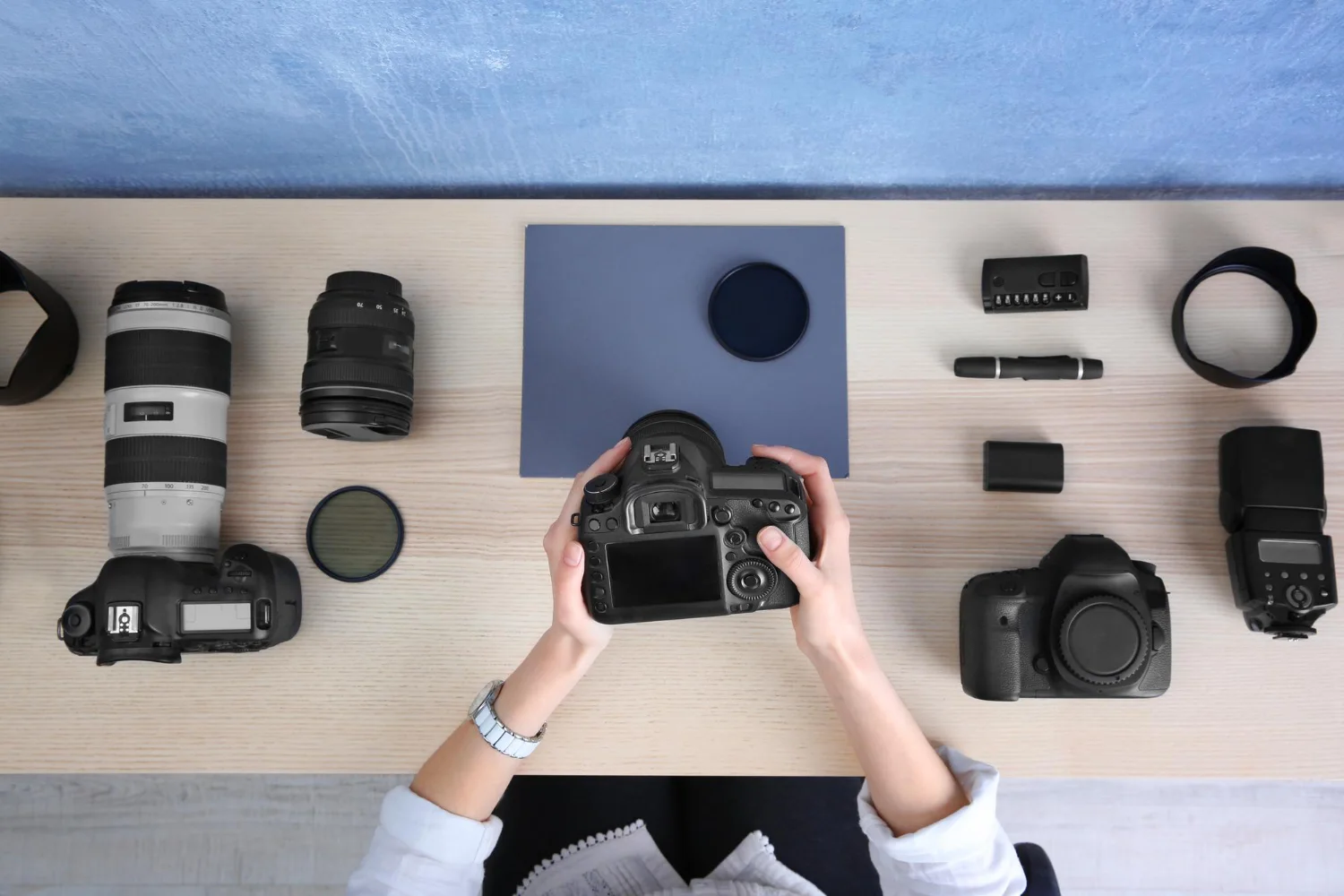
You bought your first camera and want to start capturing the world around you. You quickly realize that shooting a mountain requires a completely different approach than shooting a fast soccer game. We created this comprehensive guide to help you explore the various types of photography and find the style that fits your creative vision.
Portrait Photography
Portraiture remains one of the most accessible and popular ways to use a camera. You focus entirely on capturing the personality and emotion of a human subject. You do not need expensive studio equipment to start taking incredible portraits of your friends and family.
Choosing The Right Lens
You want to flatter your subject when you shoot portraits. Photographers usually reach for lenses between fifty and eighty-five millimeters. These focal lengths mimic the human eye and prevent unnatural distortion of facial features.
You also want a lens that allows a wide aperture. A wide aperture blurs the background and separates your subject from distracting elements behind them. This optical effect instantly makes your photos look highly professional.
Finding Flattering Light
You must pay close attention to how light hits your subject. Hard, direct sunlight creates terrible shadows under the eyes and nose. You should move your subject into the shade or wait for an overcast day for softer, more even lighting.
A simple window provides excellent light for indoor portraits. You ask your subject to face the window directly or stand at a slight angle. The soft, directional light shapes their face and creates beautiful catchlights in their eyes.
Landscape Photography
Landscape photographers possess a deep love for the outdoors. You hike into the wilderness to capture the scale and beauty of nature. This style requires immense patience because you constantly wait for the weather and light to cooperate.
Maximizing Depth Of Field
You want everything from the closest rock to the furthest mountain to remain sharply in focus. You achieve this by setting your camera to a narrow aperture. You force the lens to render the entire scene with crisp, incredible detail.
A narrow aperture restricts the amount of light hitting your sensor. You often need a much slower shutter speed to compensate for this loss of light. You must use a sturdy tripod to keep the camera completely still during the exposure.
Hunting For Foreground Interest
A beautiful mountain alone often makes a flat and boring photograph. You need to anchor the image by placing something interesting close to the lens. You can use a colorful patch of flowers, a jagged rock, or a winding stream.
This foreground element gives the viewer a visual starting point. Their eyes enter the frame at the bottom and travel through the image toward the distant horizon. You create a powerful sense of three-dimensional depth on a two-dimensional screen.
Street Photography
Street photography challenges you to document everyday human life in public spaces. You wander the city looking for interesting characters, funny coincidences, and raw emotion. You never plan your shots, and you never ask people to pose for you.
Staying Unnoticed
You completely ruin a candid moment the second a person notices your camera. You need to act like a tourist and avoid drawing attention to yourself. Small, quiet cameras work much better for this style than massive professional rigs.
You wear dark, unassuming clothes and move slowly through the crowd. You keep your camera close to your body instead of leaving it pressed against your face. You learn to shoot quickly and keep walking before anyone realizes what happened.
Waiting For The Decisive Moment
You rarely find the perfect composition and the perfect subject at the exact same time. You often find a beautiful patch of light or an interesting geometric background first. You stop walking and wait for the right person to step into your frame.
You might stand on a street corner for twenty minutes waiting for a subject wearing a bright red coat. You practice patience and anticipation instead of constantly chasing people down the block. You let the photograph come to you.
Macro Photography
Macro photography forces you to look at the world on a microscopic level. You magnify tiny subjects like insects, water drops, and textures until they fill the entire frame. You reveal fascinating alien worlds hiding right in your own backyard.
Investing In Macro Gear
You cannot achieve true magnification with a standard zoom lens. You must invest in a dedicated macro lens or purchase affordable extension tubes. These tools allow your camera to focus on subjects sitting mere inches away from the glass.
You also need extra light because macro lenses block the sun when you get too close to your subject. You use small LED panels or specialized ring flashes that attach directly to the front of your lens. You ensure your tiny subjects receive plenty of bright, even illumination.
Managing Extreme Focus
Depth of field becomes incredibly shallow when you shoot at macro distances. Only a fraction of a millimeter might stay in focus at any given time. You cannot rely on autofocus because the camera constantly hunts for the right spot.
You switch your lens to manual focus and slowly move your entire body forward and backward. You hold your breath and wait for the insect eye to become perfectly sharp. You press the shutter the exact millisecond you hit the right focus plane.
Wildlife Photography
Wildlife photographers endure freezing temperatures and sweltering heat to capture animals in their natural habitats. You need a deep understanding of animal behavior to anticipate their movements. You must respect nature and never disturb your subjects for the sake of a photo.
Reaching Across Distances
Wild animals rarely let you walk right up to them. You need long telephoto lenses to capture tight shots from a safe distance. These massive lenses cost a lot of money, but many students rent them for specific weekend trips instead of buying them.
You use these long focal lengths to compress the background and isolate the animal. You blur the messy forest behind them and keep all the attention on your subject. You create dramatic, intimate portraits of creatures that most people never see up close.
Focusing On The Eyes
A wildlife photo always fails if the animal eyes look soft or out of focus. You must train your autofocus system to track the eyes of a moving subject. Many modern cameras offer specialized animal eye tracking features that make this process much easier.
You always want to position yourself at eye level with the animal whenever safely possible. You drop to the ground to photograph a fox or climb a ridge to shoot a bird. You create a much stronger emotional connection when you meet the animal on their level.
Sports And Action Photography
You face total chaos when you photograph a fast-paced sporting event. You deal with unpredictable subjects, changing light, and split-second moments. You must know the rules of the game to predict where the action happens next.
Freezing High Speed Action
You cannot capture a sharp photo of a sprinting athlete with a slow shutter speed. You crank your shutter speed up to incredible speeds to freeze every drop of sweat and every muscle movement. You accept the need for higher ISO levels to make this fast exposure possible.
You track your subjects constantly and keep them framed tightly in your viewfinder. You shoot in continuous burst mode to fire off ten or twenty frames in a single second. You review the sequence later and pick the one frame that perfectly captures the peak of the action.
Capturing The Emotion
The best sports photos show more than just people running around a field. You want to capture the agony of defeat and the thrill of victory. You turn your camera toward the sidelines to shoot the coaches and the reacting players.
You photograph the fans in the stands going wild after a winning goal. You look for the quiet moments of exhaustion when a player sits alone on the bench. You tell the complete human story surrounding the physical competition.
Architectural Photography
Architectural photography celebrates human design and engineering. You capture the grand exterior of modern skyscrapers and the intimate details of historic interiors. You use light and perspective to turn functional buildings into stunning pieces of art.
Correcting Converging Lines
You instantly notice a problem when you stand on the street and tilt your camera up at a tall building. The sides of the building appear to lean inward and fall backward. You call this optical illusion converging vertical lines.
Professional architectural photographers use expensive tilt-shift lenses to physically correct this distortion inside the camera. You can achieve similar results as a beginner by using the geometry correction tools in your editing software. You always want your buildings to stand perfectly straight and tall.
Following The Light
Buildings never move, so you must rely entirely on the moving sun to change the look of the structure. You visit a location at dawn to capture cool shadows and empty streets. You return at sunset to see the glass facade glowing with warm light.
You even return at night to photograph the artificial interior lights shining through the windows. You experiment with long exposures to turn passing cars into streaks of light that contrast with the static building. You treat the structure as a canvas for the changing light.
Product Photography
Commercial businesses constantly need high-quality images to sell their goods online. You use product photography to make ordinary items look incredibly desirable and expensive. You take complete control over every single variable in your shooting environment.
Building A Controlled Set
You do not need a massive commercial studio to start shooting products. You can build a small tabletop studio in your bedroom using white poster board and a few cheap desk lamps. You create a clean, distraction-free environment that forces the viewer to focus entirely on the item.
You use white bounce cards to fill in dark shadows and highlight the shape of the object. You use black cards to block unwanted reflections on shiny surfaces like glass or metal. You meticulously shape the light until the product looks absolutely perfect.
Highlighting Fine Details
Consumers cannot touch the product through a computer screen. You must use your camera to communicate the texture and quality of the materials. You focus on the stitching on a leather shoe or the condensation on a cold glass bottle.
You ensure every inch of the product remains in sharp focus. You might even take multiple photos at different focus points and blend them together later. You deliver a flawless image that helps a small business grow their sales.
Building Your Own Skillset
You do not have to choose just one type of photography and stick with it forever. The skills you learn in one discipline naturally translate and improve your abilities in another. You experiment with everything until you find what brings you the most joy.
- Try shooting a completely different subject every single weekend.
- Rent specialized lenses to test a new style before spending your money.
- Study the work of famous photographers in the genres that interest you most.
- These platforms with https://essaypro.com/plagiarism-checker assist learners by converting detailed assignment briefs into well-structured essays that demonstrate clarity, logical progression, and academic integrity.
Pure Photo Guide exists to help you navigate all these creative paths and become a more confident photographer.